

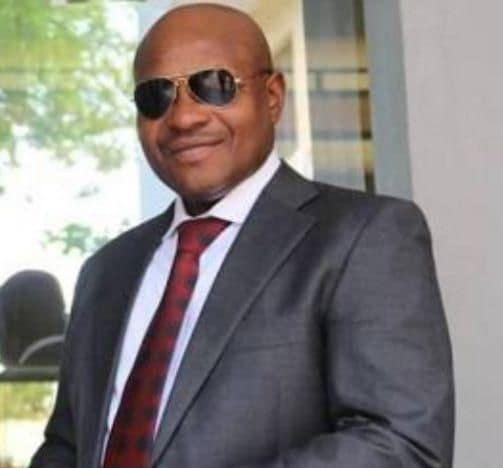
In a country where security agencies are often judged by public drama rather than quiet effectiveness, the Department of State Services (DSS) in 2025 offers a markedly different narrative. Under the leadership of its Director-General, Oluwatosin Adeola Ajayi, the service has pursued reforms anchored on intelligence professionalism, inter-agency coordination and respect for the rule of law — outcomes that are gradually reshaping Nigeria’s internal security landscape.
Since assuming office in 2024, Ajayi has steered the DSS away from reactive enforcement towards intelligence-driven prevention. This shift became more pronounced in 2025, as the Service focused on penetrating terrorist cells, disrupting kidnapping syndicates and tracking arms-trafficking networks across the North-East, North-West and parts of the Middle Belt. Several threats were neutralised before manifesting into attacks, underscoring the value of proactive intelligence over post-incident response.
A notable feature of the DSS’s performance in 2025 has been improved inter-agency cooperation. Historically, rivalry and poor intelligence sharing weakened Nigeria’s security response. Under Ajayi, the DSS strengthened intelligence fusion with the Armed Forces, the Nigeria Police Force and other agencies, reducing duplication and enhancing response time. This coordination contributed to better situational awareness and more coherent security operations across multiple theatres.
Beyond operational outcomes, the DSS also recorded gains in institutional credibility. In a significant departure from past practice, the Service reviewed legacy detention cases, released individuals held without sufficient legal basis and complied with court orders on compensation. These actions attracted commendation from legal practitioners, civil society groups and public commentators, who viewed them as evidence that national security can be pursued within the bounds of the law.
Public and individual commendations for the DSS leadership also became more visible in 2025. State governments and community leaders in volatile areas acknowledged the role of timely intelligence in preventing violence and restoring calm. Security analysts and retired officers praised Ajayi’s restrained leadership style, noting that his emphasis on professionalism, discretion and internal discipline aligns with global best practices for democratic intelligence agencies.
Notably, Ajayi’s evolving leadership profile also received recognition beyond traditional security circles. In 2025, the Nigerian National Committee of the International Press Institute recognised the DSS Director-General as a champion of press freedom, citing improved engagement with media institutions and a more restrained approach to press-related security issues. The recognition was significant in a sector historically defined by tension between security agencies and the media, and it reinforced perceptions of a leadership style inclined towards balance rather than confrontation.
Internally, the DSS experienced morale-boosting reforms. Welfare, training and career progression received renewed attention, strengthening professionalism within the Service. Training programmes were updated to address emerging threats such as cyber-enabled crime and transnational criminal networks. The appointment of the first female Deputy Director-General further signalled institutional maturity and a commitment to merit-based leadership.
Community engagement also formed a quiet but critical pillar of the DSS’s approach. By strengthening local intelligence networks and early-warning mechanisms in areas prone to communal tension, the Service improved its preventive capacity, reinforcing the principle that effective intelligence begins at the grassroots.
Nigeria’s security challenges remain daunting. Terrorism, banditry and organised crime have not disappeared. However, the DSS’s trajectory in 2025 suggests a clearer sense of direction. Under Ajayi, the service has shown that intelligence work can be firm without being reckless, secretive without being lawless, and effective without undermining public trust.
If sustained, these reforms could help reposition the DSS as a stabilising force within Nigeria’s democratic framework—an intelligence institution defined less by controversy and more by quiet competence.
Adesogan is a security analyst and digital communications expert. He can be reached via adesoganmedia@gmail.com or on X (Twitter) @DejiAdesogan.


